
Waist packs and belt bags can be worn at the waist or across the body, so their usability depends on fit, strap adjustment, bag position, and access to the contents. Buyers should define the intended wearer and carry mode before selecting a size or pocket layout.
Decide how the bag will be worn
Identify whether the product is intended for waist wear, crossbody carry, or both. Define the target users and the adjustment range needed. If several body sizes or carry positions are expected, review them with representative wearers rather than judging an empty sample on a table.
A compact nylon waist-bag reference shows one smaller format. Its listed capacity does not determine what your version should hold; list the actual phone, wallet, keys, or accessories you expect users to carry.
Provide the strap’s usable adjustment range and how it is measured, including buckle overlap and the portion of the strap occupied by the bag. Ask the supplier to show the adjustment range on the sample and test it at the intended wear positions.
Set capacity, pockets, and access
Provide body dimensions and the dimensions of key contents. Clarify whether the main opening should face up, toward the wearer, or in another direction, and identify any quick-access pocket. Keep pocket dimensions practical for the actual objects they need to hold.
Think about zipper direction, puller size, buckle access, and whether a pocket should be protected against casual access. Describe the requirement precisely; avoid using a security or anti-theft claim unless the construction and evidence support it.
List the largest phone, wallet, keys, or travel item the main compartment must hold. Add clearance for the zipper path and lining, then verify that the sample can close without bending or pressing on the contents.
Choose materials and branding
Specify the shell, lining, zipper, webbing, buckle, strap width, and preferred colors. If the bag will be used outdoors or in active settings, state any measurable performance needs and how those should be verified for the chosen materials.
Provide logo artwork, size, placement, and preferred method. Small curved panels may limit decoration area, so ask the supplier to show placement on the sample or a production-representative proof.
If the bag is worn during movement, check whether the buckle stays accessible, the strap tail can be secured, and the loaded bag shifts or bounces. Use realistic clothing and movement during review and document the conditions tested.
Evaluate the sample and prepare your inquiry
Check fit at the requested adjustment points, bag position when worn, access to pockets, zipper movement, buckle operation, stitching, and the way the sample looks with real contents. Record any changes against the approved version.
For a quote, send the carry mode, target fit range, item list, dimensions, material, colors, branding, quantity, and destination market. Confirm customization, sample arrangements, MOQ, and timing for the specific project.
For a collection with several colors or trims, confirm whether each version uses identical hardware and strap construction. Link artwork and material references to a named colorway so production files and approvals remain unambiguous.
Buyer questions
Can one waist bag be worn as both a belt bag and crossbody?
It depends on strap length, adjustment, attachment points, and the bag’s proportions. Confirm both carry positions on a sample.
What is the best capacity for a belt bag?
Choose capacity from the user’s actual contents and dimensions, then check usable space and access on a sample.
Styles mentioned in this guide
These are product references, not a promise of stock or fixed specifications. Open a style page to review its current details.

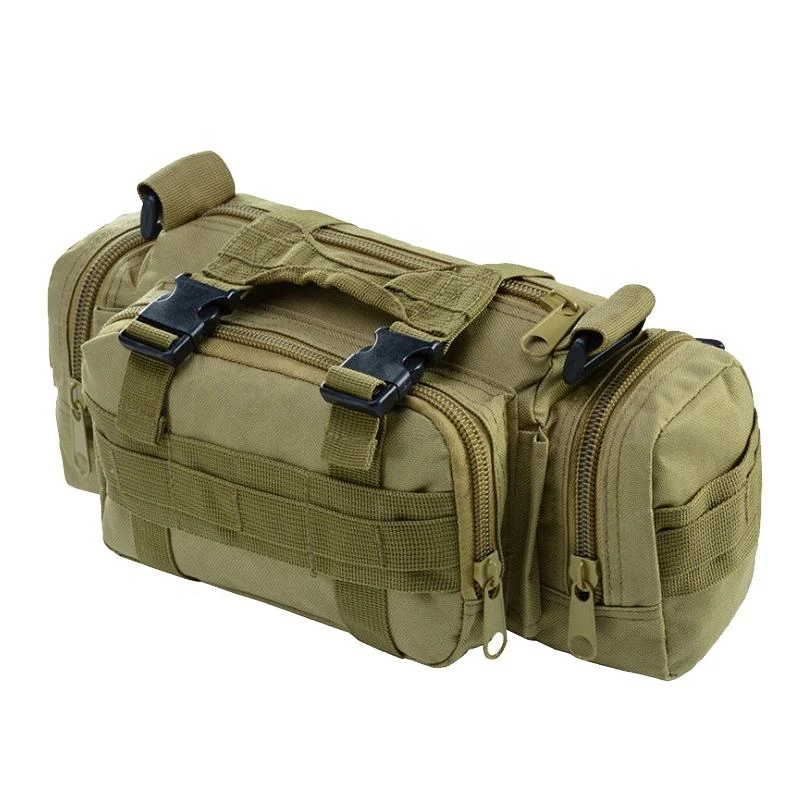
900D Oxford Tactical Waist Bag with Nine Color References
View product reference →Need help applying this guide to a product?
Send the product reference, intended use, target market, and the details you want to confirm.